Modern businesses depend on technology more than ever. But slow systems, security threats, and constant tech issues can interrupt daily work and reduce productivity. When employees waste time fixing problems, customers feel the delay.
This is why more companies now turn to external IT teams. They offer steady support, quick fixes, and watch over systems around the clock. It removes the stress of handling everything alone.
In this guide, you will see the real benefits that companies gain when they rely on managed IT services.
What Are Managed IT Services?
Managed IT services mean a company hires an outside team to handle its technology needs. Instead of fixing problems on their own, the business gets ongoing support from trained IT professionals.
These services usually include:
- Network setup and monitoring
- Cyber safety and threat prevention
- Data backup and quick recovery
- Software updates and system checks
- Help desk support for staff
- Hardware management and maintenance
This service is common among:
- Small businesses that cannot afford a full in-house IT team
- Medium-sized companies that want steady support
- Fast-growing companies that need reliable systems as they expand
The goal is simple: keep technology running smoothly, so the business can keep working without delays.
Top 10 Benefits of Managed IT Services
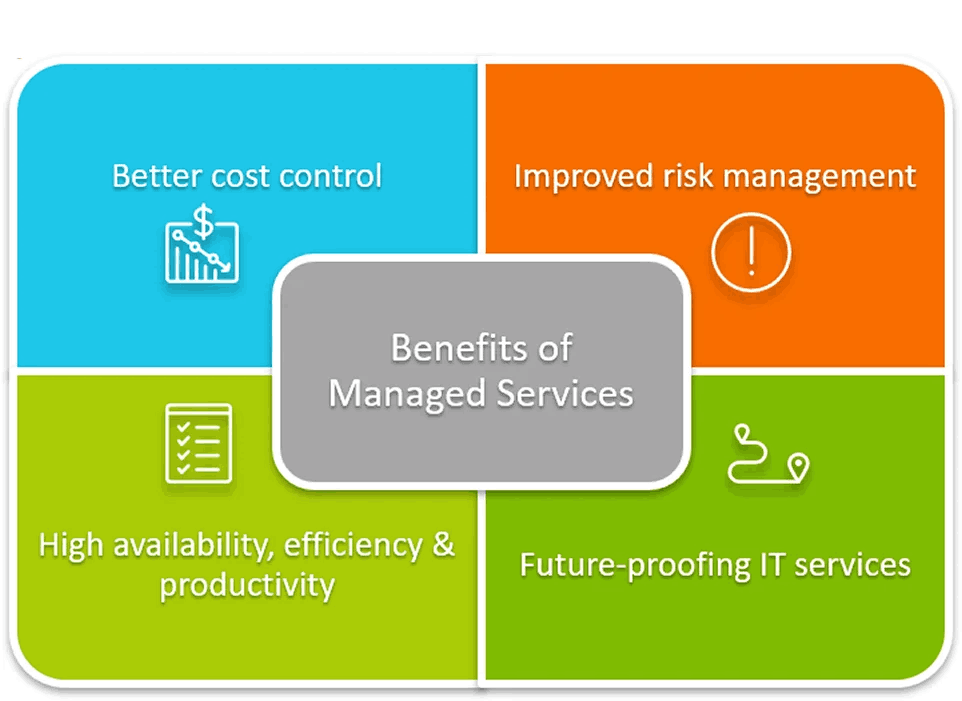
1. Lower IT Costs
Managed IT prevents expensive emergency fixes.
- A steady monthly fee keeps spending under control
- No hidden repair charges
- Easy to plan budgets for the year ahead
2. Strong Cyber Protection
Your systems stay safe from online threats.
- Round-the-clock monitoring
- Issues are blocked before they damage data
- Better safety from hacking and ransomware
3. Less Downtime
Work continues without major interruptions.
- Faults detected early
- Quick action when a problem appears
- Staff stay productive instead of waiting
4. Access to Skilled IT Experts
You get help from trained professionals.
- No hiring or training costs for your team
- Specialists fix issues faster
- Access to a broad range of technical skills
5. Better Focus on Core Work
IT stress does not slow teams down.
- Staff can focus on customers and projects
- Less time wasted dealing with tech issues
- Managers stay focused on business goals
6. Latest Tech and Tools
Systems stay updated behind the scenes.
- New software installed and managed safely
- Tools stay current with today’s needs
- Improved security and performance
7. Data Backup and Fast Recovery
Your data stays protected, even after failures.
- Automatic off-site backups
- Quick restore options after an outage
- Reduced risk of permanent data loss
8. Better Network Performance
Everything runs smoothly.
- Faster and stable connections
- Fewer system errors
- Better experience for staff and customers
9. Always-On Support
Help is available whenever it is needed.
- Support beyond regular office hours
- Remote help resolves issues quickly
- No long waiting times for on-site visits
10. Scales With Business Growth
IT changes as the company grows.
- Easy to add new users or locations
- No major rebuilds or replacements
- IT stays aligned with business needs
Managed IT Services vs In-House IT Team
| Feature | Managed IT Services | In-House IT Team |
| Cost | Fixed monthly cost | Salaries, training, and hardware expenses |
| Support Hours | 24/7 monitoring and help | Usually, office hours only |
| Skill Range | Access to many certified experts | Limited to current staff skills |
| Scalability | Easy to expand as business grows | Hard to scale without hiring more staff |
| Response Time | Fast remote fixes | Might be slower if team capacity is low |
| Cyber Safety | Advanced security tools included | Extra cost for security upgrades |
When Managed IT Services Fit Well
- Small or medium companies with limited budgets
- Businesses that need round-the-clock support
- Fast-growing companies needing quick expansion
When In-House IT Fits Well
- Large companies with complex internal systems
- Organizations that want direct, full-time staff on-site
Who Can Benefit the Most?

Managed IT services are useful for many different companies, especially when internal resources are limited.
- Small businesses with tight budgets
They get full IT support without hiring a large team. - Companies growing fast
Services can expand easily as new staff or locations are added. - Remote or hybrid workplaces
Teams working from different places need stable and secure access. - Businesses with sensitive customer data
Strong cyber safety helps protect private information from attacks.
Managed IT gives these businesses the support they need to work smoothly and safely every day.
How to Pick the Right Managed IT Provider
Choosing the right partner matters for long-term success. Here are the key things to review before signing any contract:
- Check experience and response time
Make sure the team has proven skills and can respond fast when an issue appears. - Clear service agreement
The contract should list what is included, what is not, and how support is delivered. - Local + remote support availability
Remote fixes should be quick, and on-site help should be available when needed. - Reviews or case studies
Look for real examples of results and feedback from other businesses like yours.
A reliable provider will show transparency, strong communication, and a plan that fits your goals.
Final Thoughts
Managed IT services help businesses work without technology slowdowns. They reduce costs, improve security, and give teams more time to focus on real work. With steady support and strong system performance, companies can move forward with confidence.
If you want fewer IT worries and a safer setup, this is a smart step to consider. You can reach out to a managed IT provider today and see how they can support your daily operations.
FAQs
1. Are managed IT services only for big companies?
No. Many small and medium businesses use managed IT because it offers strong support without hiring a full IT team.
2. Can a managed IT provider work with our existing systems?
Yes. They check your current setup and improve it instead of forcing a complete change.
3. Do managed IT services include cyber safety?
Most providers include monitoring, threat blocking, and regular updates to keep data safe.
4. What happens if a system goes down after hours?
You can still get help. Most providers offer support beyond standard office times, even nights and weekends.
5. Will my team still have control over the systems?
Yes. The provider supports your technology, but your company stays in charge of all business decisions.