AI search optimization focuses on structuring content so AI systems can clearly understand who it is for, what it solves, and how it connects to real business context. This guide explains the process step by step, using simple language, practical examples, and clear structures that work for both search engines and AI models.
Why AI Search Changes Content Rules
Traditional SEO focused on rankings, keywords, and links. AI-driven search adds another layer. AI systems summarize, compare, and answer queries directly. This means your content must explain clearly, not just rank.
AI search looks for:
- Clear meaning
- Logical structure
- Reliable context
- Consistent language
If content is unclear or scattered, AI may skip it—even if it ranks.
Key Point: Ranking alone is not enough. Content must be readable by machines and humans at the same time.
How AI Systems Read Content
AI models do not “scan” pages like humans. They break content into patterns.
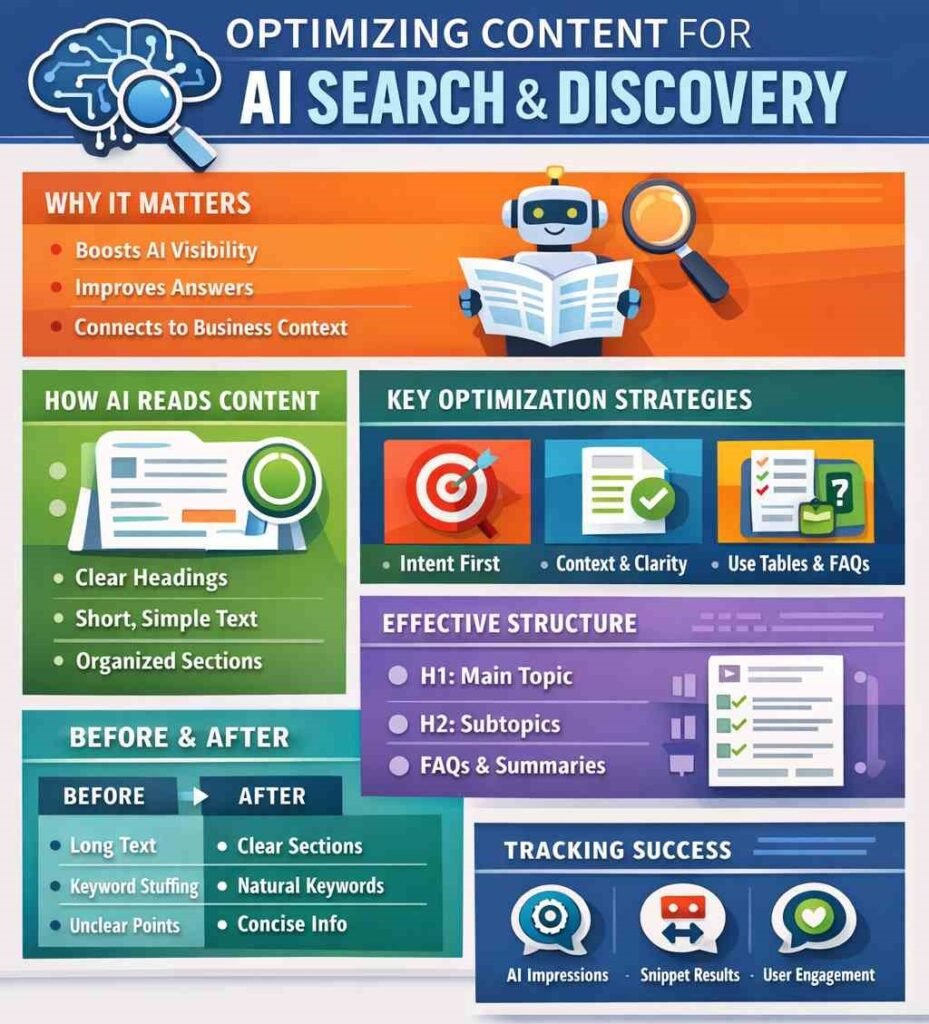
What AI Looks For
- Headings that explain intent
- Short, direct sentences
- Defined sections with one purpose each
- Lists, tables, and summaries
- Repeated context without repetition
What AI Ignores
- Long blocks without structure
- Sales-heavy language
- Vague statements
- Overloaded keywords
Core Principles of AI Search Optimization
1. Intent Comes First
Every section should answer one clear intent.
| Section Type | Primary Intent |
| Introduction | Define the topic |
| H2 Sections | Explain subtopics |
| Tables | Compare or summarize |
| FAQs | Direct answers |
2. Context Before Keywords
Keywords matter, but context matters more.
Instead of forcing:
“optimize content for AI search” repeatedly
Use natural variations:
- AI search content optimization
- optimizing for AI overviews
- AI strategic visibility
AI Strategic Visibility Explained
AI strategic visibility means your content appears correctly when AI systems summarize topics, suggest sources, or generate answers.
AI Business Context Strategic Visibility
This goes deeper than traffic. It connects content to:
- Business use cases
- Industry language
- Decision-making scenarios
Example:
A page about AI search optimization should clearly state:
- Who needs it (marketers, site owners)
- Why it matters (visibility in AI results)
- Where it applies (content pages, blogs, guides)
Content Structure That AI Understands
Recommended Page Layout
H1 – Main Topic
H2 – Core Concept
H3 – Explanation
H3 – Practical Example
H2 – Tools or Methods
H2 – Comparison Table
H2 – FAQs
Why This Works
- AI can segment information
- Each section has a defined role
- Content is reusable for summaries
Optimizing for AI Overviews
AI overviews pull short answers from long pages.
How to Prepare Content for AI Overviews
- Add a short summary under key headings
- Use bullet points for processes
- Place definitions early
- Avoid hidden meanings
Tip: Write as if each section could stand alone.
Best Practices for Optimizing for AI Search Engines

Writing Style
- Simple English
- Short sentences
- One idea per paragraph
- No filler words
Formatting Rules
- Use H2 and H3 headings only
- Keep paragraphs 4–6 lines
- Add tables where comparison helps
- Use bold text for key terms only
AI Search Content Optimization Tools
While tools help, structure matters more.
Common Tool Types
| Tool Type | Purpose |
| Content analyzers | Check clarity and structure |
| SERP tools | Review AI snippets |
| Schema testers | Validate structured data |
| Readability tools | Improve human clarity |
Tools support decisions. They do not replace clear writing.
Boost AI Search with Structured Comparisons
Before vs After Optimization
| Area | Before | After |
| Structure | Long paragraphs | Clear sections |
| Readability | Complex | Simple |
| AI Summary | Skipped | Included |
| Visibility | Limited | Broader |
Most Effective AI Optimization for Visibility Improvements
What Works Best
- Clear topic definitions
- Consistent terminology
- Reusable sections
- FAQ blocks
- Logical flow
What Has Low Impact
- Keyword stuffing
- Over-promotional tone
- Rewriting without structure
- Copying competitor layouts
Measuring Visibility Improvements
AI visibility is not always visible in standard reports.
Metrics to Track
- Impressions from AI results
Featured snippet presence - Brand mentions in summaries
- Engagement time
Simple Tracking Table
| Metric | Tool | Frequency |
| AI impressions | Search Console | Monthly |
| Snippet presence | Manual checks | Weekly |
| Engagement time | Analytics | Monthly |
Common Mistakes to Avoid
- Writing for bots only
- Ignoring human readers
- Mixing multiple intents in one section
- Using unclear headings
- Overusing bold text
Reminder: AI prefers clarity, not complexity.
Final Checklist
- Clear H1 and meta title
- Defined H2 and H3 sections
- Short summary blocks
- Tables for comparisons
- FAQs for direct answers
- Consistent keyword usage
- Simple language throughout
Final Conclusion
AI search is changing how content is found, read, and shared. Pages that rely only on old SEO methods are slowly losing visibility. Today, content must explain ideas clearly, follow a logical structure, and stay closely connected to real user intent.
When you optimize content for AI search, you are not writing for machines alone. You are making your content easier for people to understand and easier for AI systems to trust. Clear headings, simple language, structured sections, and helpful summaries allow AI models to extract accurate answers and present your content in AI overviews, summaries, and search results.
The most reliable approach is consistency. Use one main topic per page. Support it with well-organized subtopics, tables, and FAQs. Avoid forced keywords and focus on meaning instead. Over time, this improves AI strategic visibility, strengthens business context, and increases long-term discoverability across both traditional search engines and AI-driven platforms.
Content that is clear, structured, and genuinely useful will continue to perform well—no matter how search technology evolves.
FAQs for AI Search Optimization
What is AI search optimization?
AI search optimization means structuring content so AI systems can understand, summarize, and reuse it accurately.
Is it the best SEO for AI visibility products?
Yes, when content explains product use cases clearly and avoids vague claims.
Are AI search optimization services different from SEO?
They focus more on structure, meaning, and context rather than rankings alone.
Do AI tools replace content strategy?
No. Tools support writing, but strategy defines direction.
How long does AI visibility improvement take?
Most sites see changes within 4–8 weeks after content updates.